How Marine Lithium Batteries Are Compared on This Site
The evidence standard used to compare marine lithium batteries, BMS capability, ingress protection, warranty, documentation and whole-system suitability.
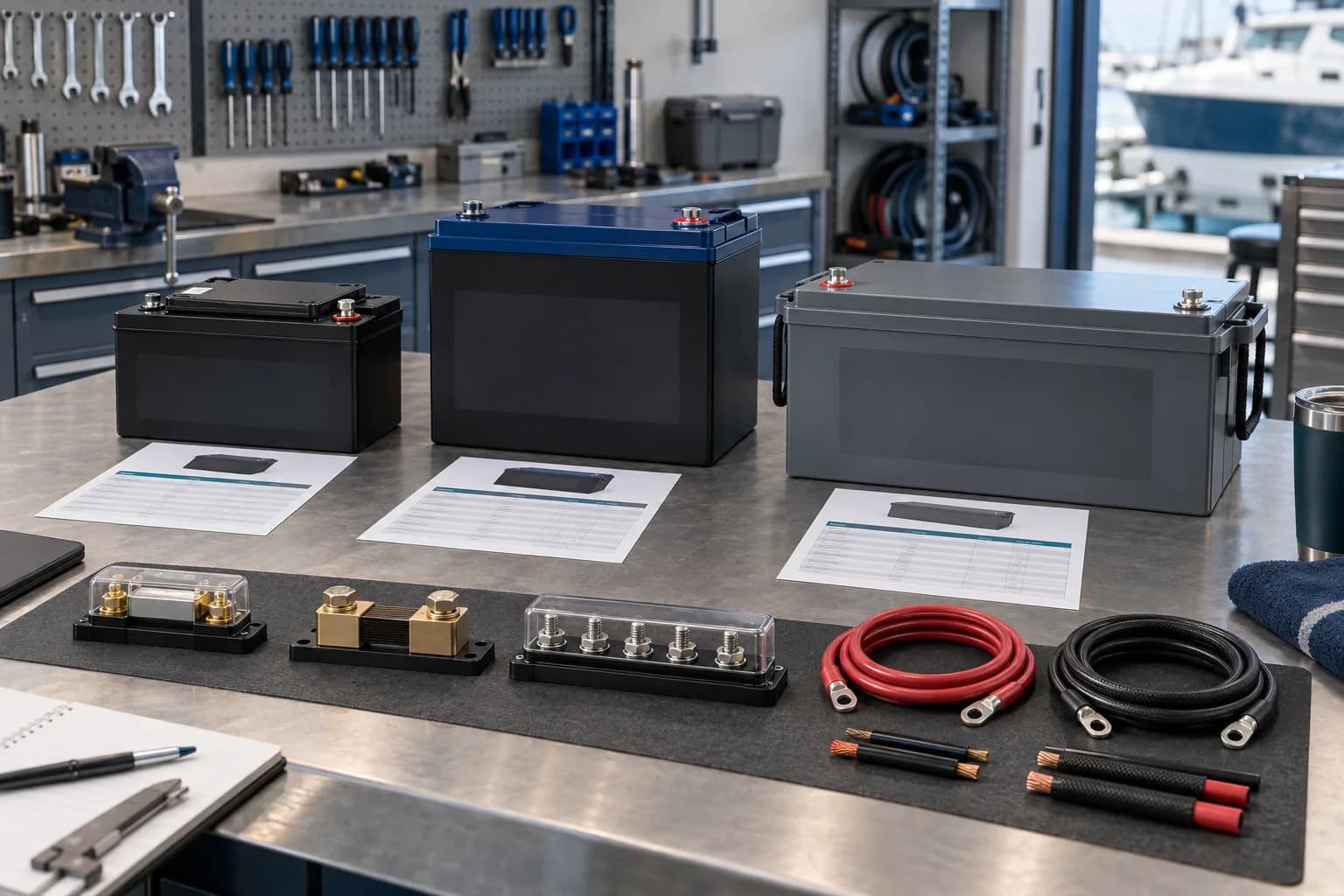
A marine battery comparison should help a boat owner make a better decision, not turn incomplete specifications into a league table. This site separates manufacturer claims, verified specifications, installation implications and first-hand observations so readers can see the strength of the evidence behind each statement.
No battery receives a performance ranking merely because its product page is polished, its logo is familiar or a retailer supplied an affiliate link.
Evidence levels
Information is classified internally in four practical levels:
- Manufacturer-stated: taken from a current official datasheet, manual or warranty document.
- Independently documented: supported by a regulator, recognised testing body, standard or credible technical publication.
- Observed: measured or photographed directly, with the test conditions recorded.
- Inferred: a design implication calculated from disclosed figures, clearly described as an inference.
If a specification cannot be confirmed, the comparison should say “not stated”. An explicit missing value is more useful than a guessed number repeated across multiple pages.
Specification normalisation
Battery energy is compared in watt-hours or kilowatt-hours, not amp-hours alone. Continuous and peak BMS current are recorded separately, along with the permitted duration of a peak where disclosed. Charge current, temperature limits, mass, dimensions, terminal arrangement and connection limits are kept in their original units and normalised for tables.
Ingress ratings are recorded with the scope stated by the manufacturer. An enclosure rating does not automatically cover exposed terminals, communications ports, external fuses or the complete boat installation.
Documentation and support checks
A comparison reviews the installation manual, charging instructions, warranty exclusions, local support route, return process, software requirements and availability of technical data. Warranty duration alone is not enough; the responsible entity, transfer conditions, labour coverage and exclusions can matter more aboard a boat.
Product names and brand logos identify their owners. Logos are used only when an official asset and a reasonable right to display it can be confirmed. A missing logo does not lower a product’s assessment, and visual prominence never determines ranking.
Whole-system suitability
The battery is considered alongside maximum simultaneous load, inverter surge, alternator behaviour, solar and shore charging, fault-current protection, cable design, isolation, monitoring and the marine environment.
AMSA warns that lithium-ion batteries are energy-storage systems rather than standalone drop-in replacements. A battery that is suitable in one system may be a poor match for another even when voltage and nominal amp-hours appear identical.
First-hand testing requirements
A page is labelled as a review only when the product or complete system has been inspected or tested directly. The test record should identify the sample, firmware, equipment, ambient conditions, charge and discharge limits, measurement method and any manufacturer involvement.
Useful observations can include delivered capacity under stated conditions, voltage behaviour, sustained current, protection response, standby draw, monitor accuracy, thermal behaviour and documentation quality. Destructive safety tests require specialist facilities and are not simulated on a boat.
Corrections and commercial relationships
Manufacturers and readers may submit corrections through the contact page. A correction must be supported by a current primary document or reproducible evidence. Material updates receive a new review date.
Commercial relationships, supplied products or sponsored access must be disclosed on the affected page. They do not purchase a ranking or suppress relevant limitations. Read the full editorial policy and the site disclaimer before relying on a comparison.
- 01Manufacturer-statedCurrent official manual or datasheet
- 02Independently documentedRegulator, standard or technical body
- 03ObservedDirect inspection or recorded test
- 04InferredTransparent calculation from disclosed inputs