Marine Lithium Emergency Isolation Plan
Create a clear emergency isolation and shutdown plan for a marine lithium battery system without improvising around the BMS or protection.
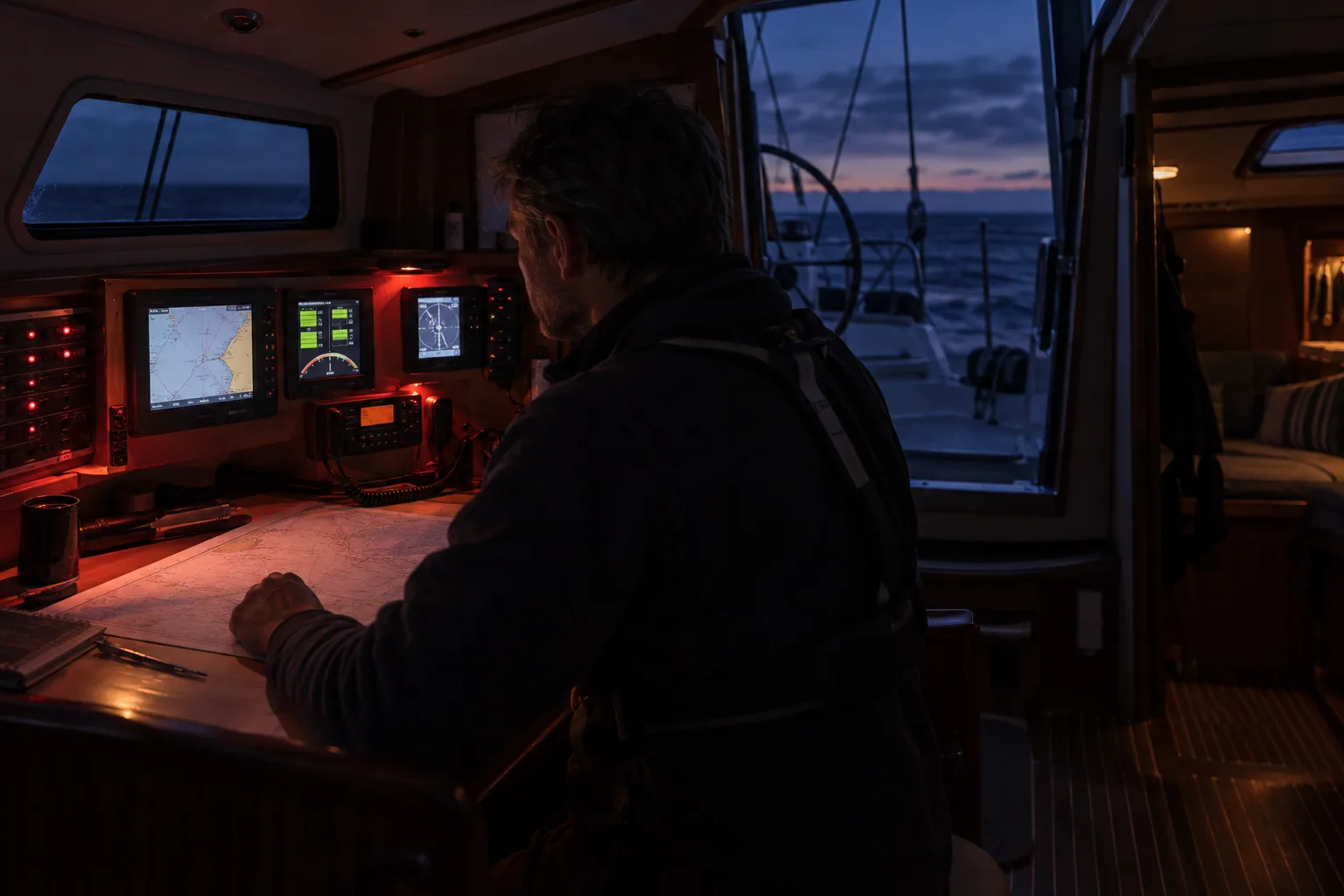
An emergency isolation plan tells the crew what can be safely disconnected, what must remain available and when the correct action is to leave the area and call emergency services. It is not a set of instructions for fighting a battery fire or overriding protection.
AMSA’s investigation of a thermal-runaway event on a domestic commercial vessel found that a battery not holding charge had been connected to a charger in a way that bypassed battery-management protection. The resulting explosion destroyed the vessel. Read the AMSA safety lesson.
Map every source of electrical energy
Opening the house-battery switch may not remove solar, alternator, shore, generator, start-battery or inverter energy from every conductor. The isolation diagram should show each source, its disconnect, the circuits that remain live and the order specified by the system designer or manufacturer.
Label isolators by function rather than relying only on colour. Labels must be readable in poor light and should match the terminology used in the emergency card and as-built drawing.
Define the trigger conditions
The plan should distinguish an ordinary equipment alarm from evidence of a dangerous event. Conditions requiring immediate escalation can include unusual heat, swelling, venting, odour, hissing, smoke, fire, damaged high-current cabling, water ingress onto energised equipment or repeated operation of protection.
Crew should not open a compartment to investigate when doing so could expose them to heat, flame or toxic gases. The vessel-specific emergency plan, emergency services and qualified fire-safety advice take precedence over a web guide.
Preserve a safe route and essential communications
Isolation controls must be reachable without leaning over the battery or entering the hazard area. Consider whether a compartment lid, berth base or stored equipment blocks access when the boat is pitching or the cabin is dark.
Document what happens to VHF, bilge pumps, navigation lights, steering support and engine starting when each isolator is used. If essential communications depend on the affected bank, the crew needs an engineered alternative—not a loose emergency lead.
Do not defeat protective systems
Never treat a protective BMS shutdown as an inconvenience to bypass. A reset may be appropriate only after the cause is understood and the manufacturer’s procedure permits it. Repeatedly reconnecting a damaged or overheating battery can make the event worse and remove useful fault history.
Temporary chargers, jumper leads and improvised connections can energise conductors outside the intended fuse and isolation arrangement. Keep the response within the documented system design.
Make the plan usable under pressure
Create a one-page card with:
- the locations and functions of isolation controls;
- the normal shutdown order and any conditions where controls must not be approached;
- which essential services remain available;
- visible danger signs and evacuation triggers;
- emergency contact instructions; and
- the exact battery and equipment model references used in the manufacturer’s emergency guidance.
Keep one copy near the navigation station and one with the electrical documentation. Review it with regular crew and after any system alteration.
Inspect and rehearse without creating a fault
A safe rehearsal confirms that labels, lighting, physical access, communications and crew understanding are adequate. It does not involve shorting conductors, heating batteries or forcing a BMS trip.
Add isolation access, labels, terminal covers, wiring condition and battery condition to planned maintenance. AMSA’s electrical safety guidance recommends regular inspection of wiring, connections and batteries and including electrical fire risks in the vessel’s safety management arrangements.
- 01DesignLoads, voltage and failure paths
- 02ControlCharging limits and BMS logic
- 03ProtectionFuses, isolation and conductors
- 04EnvironmentHeat, water, salt and restraint
- 05ProofCommissioning and records